
The Best Fluffy Pancakes recipe you will fall in love with. Full of tips and tricks to help you make the best pancakes.

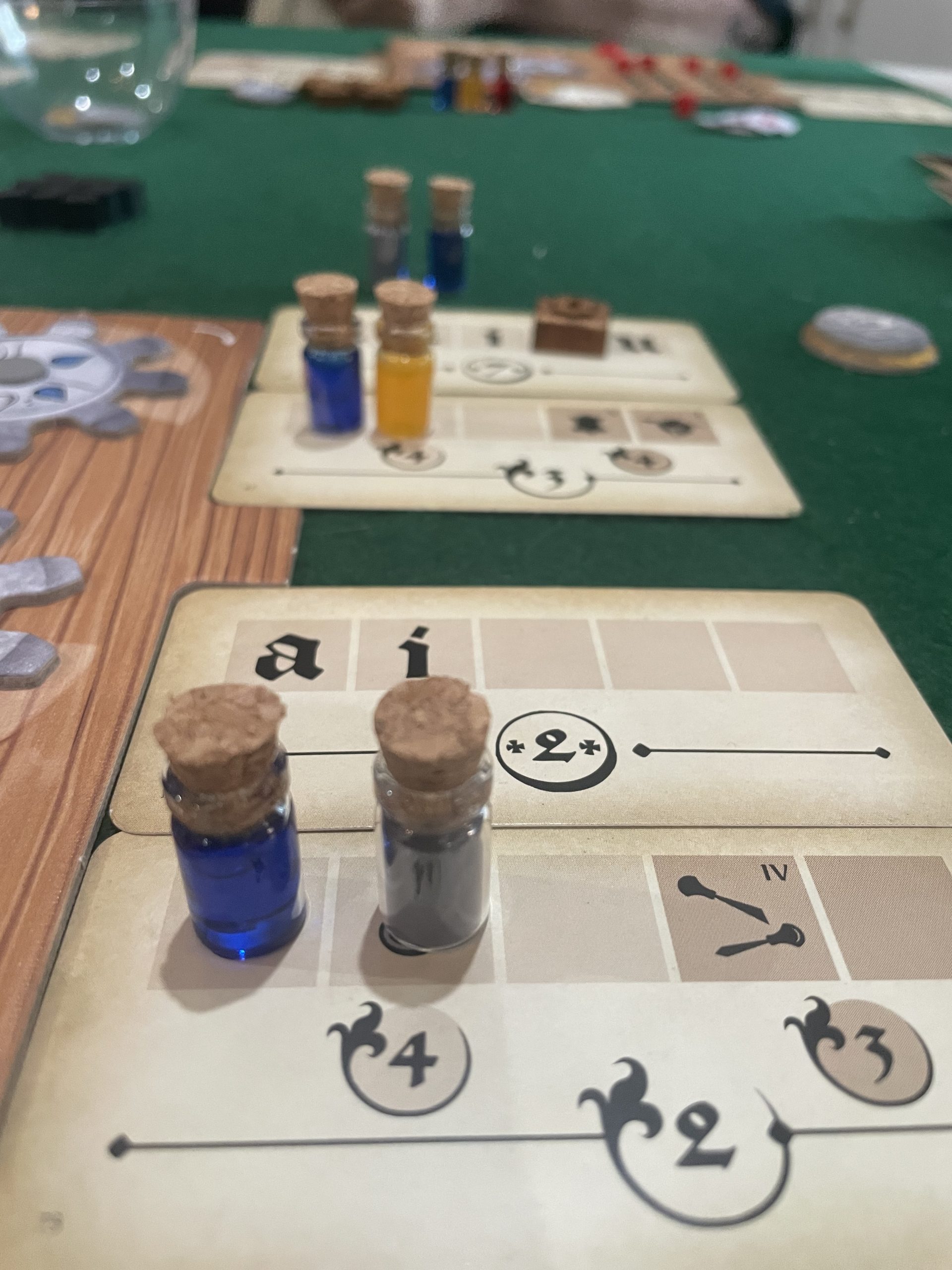
This game was made for me.
I grew up in and around my parents’ newspaper. I learned to “shag” the press (nowhere near as interesting as it sounds) when I was in grade school since “chores” in my family often amounted to child labor at the family business.
When I wasn’t getting put to work for my allowance, I played in the storeroom. I climbed on the I would trawl through the old hot lead-type boxes to find my initials. I had a whole collection of different type pieces – carved wooden letters, lead-type keys, different fonts, and sizes. I was often covered in black newspaper ink and happy about it.
When Gutenberg came out, my husband and I (both former journalists) immediately bought it. I fell in love with the wooden type pieces. They reminded me of my beloved collection.
We set up the game and played as soon as it arrived.
I hated the inkdrop tokens. Passionately.
They did not compare the amazing little wood blocks. As I lined up the blocks on my orders, I glared at the cardboard chits.
And then I got an idea.
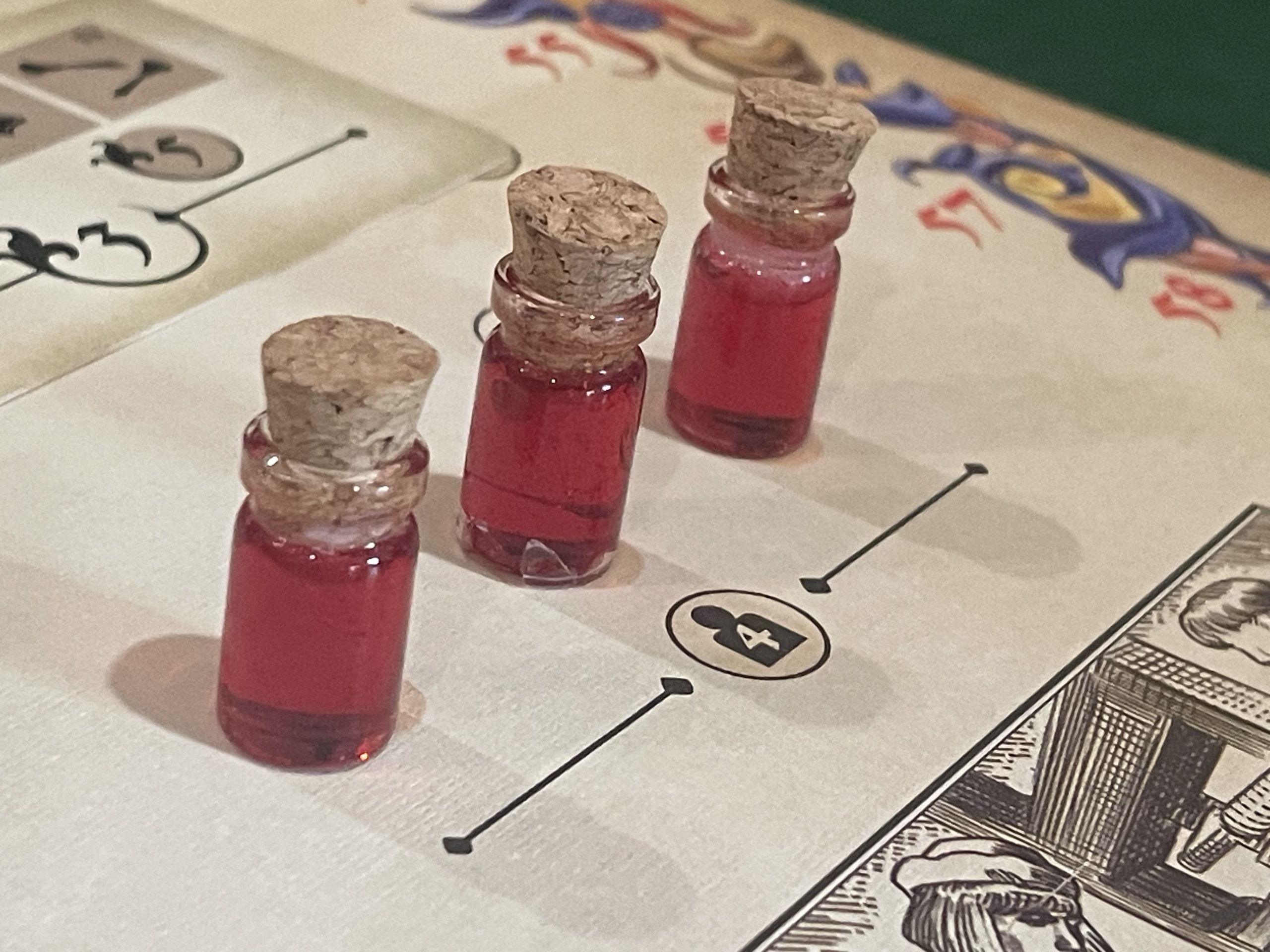
I could make much better tiny vials and fill them with the appropriate colors. I must have ordered five or six different tiny vials of varying sizes and shapes from Amazon (don’t worry, I found other uses for them…) and prototyped several versions.
My first few had a fatal flaw — at least for a boardgame — they had water shaded with food coloring. I sealed the vials with super glue, but I had visions of shattered vials destroying my game.
I have a friend who creates dice and lots of other stuff with resin. I got some advice from her and got to filling itty-bitty glass containers with colored epoxy resin using a pipette.
I used translucent inks from the resin jewelry section of the crafting store to color them so that the vials had the right luminosity. The one exception was the gray ink; those were done with a milky mixture, so the color showed up better. (For those of you who have the version of the game that uses green instead of gray for the fourth ink color, I’m a bit jealous. That would be even prettier…)
The tiny vials add so much. They clink in the draw bag and sit perfectly on the order cards. Lined up on the board in batches of three, they throw off colored umbras around when they catch the light. Thanks to their size and the epoxy, they are pretty sturdy — I haven’t had any problems with breakage.
I also get requests to bring Gutenberg with me to gaming days because my gaming friends love the addition. I’ve had 3-4 requests for their own set.
If you want to recreate these yourself here are some tips:
- I used a two-part epoxy like this. Be sure to use it somewhere well-ventilated and wear gloves.
- I used a translucent ink dye like this to get the color. Add it slowly until you get the color you want; you can always add more.
- I mixed pretty small batches; epoxy is expensive, and these vials are tiny.
- Use a pipette to fill.
- Here’s the glass vials I ended up using:
- I did superglue the corks in place for ease of use and my personal sanity.
If you are interested in Gutenberg, the game, Tom Vasel at The Dice Tower has a good review and you can learn more at BoardGameGeek.
*For the extra curious – shagging the press is scooping up stacks of newspapers as they come off the press for labeling, stuffing with inserts, and bundling. It’s filthy work, but not at all what the dirty-minded of you were thinking…)